
Impact Report
OTD’s Impact: Fiscal Year 2025
Harvard Office of Technology Development (OTD) advances Harvard innovations into real-world solutions to improve patient lives, address global challenges, and drive economic growth. Through protecting intellectual property, strategic corporate partnerships, accelerator funding, and venture creation, the OTD team and Harvard’s robust entrepreneurial ecosystem support Harvard innovators in bringing solutions to societal problems.
The following provides an overview of the advancements of Harvard innovations enabled by OTD in the fiscal year 2025 (July 1, 2024, through June 30, 2025).
Fiscal Year 2025 Impact at a Glance
32
Major Licenses
391
New Innovations
Reported
81
Industry
Collaborations
20
Startups
159
US Patents Issued
$ 73 .6M
Industry Sponsored
Research Funding
Download the OTD FY2025 Impact Snapshot.
Accelerator Support Propelling Innovation
OTD accelerator programs combine funding strategies, technical support, and business expertise to help promising innovations advance toward industry collaborations and venture creation. The three accelerator funds managed by OTD provided the following support in fiscal year 2025.
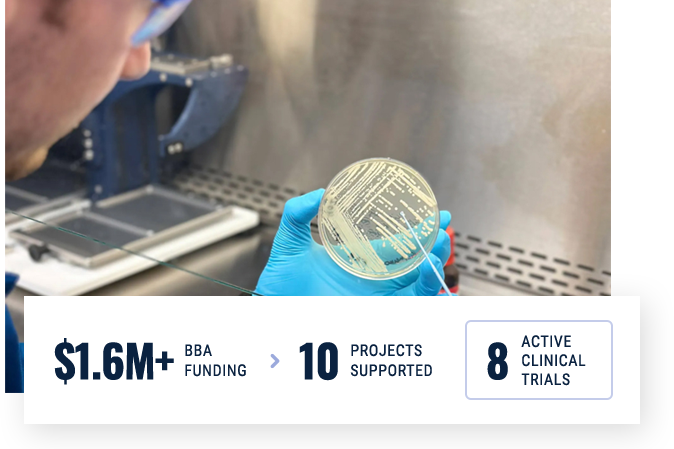
Speeding Discoveries from Lab to Patients
10 new technologies tackling urgent challenges from autoimmune disease to cancer win funding from Blavatnik Biomedical Accelerator.
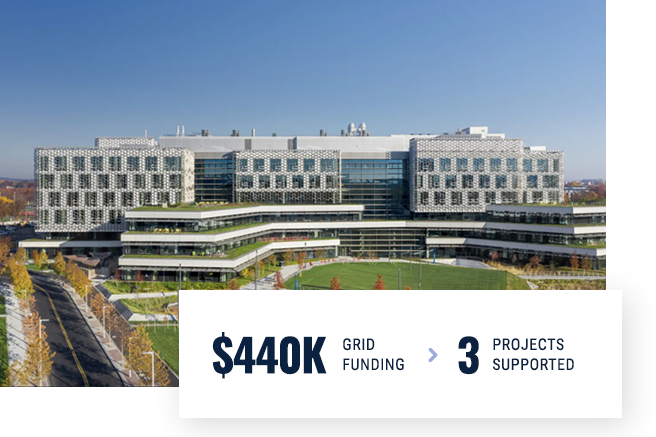
Tech Solutions to Societal Needs Will Get Help Moving to Market
Projects targeting heart health, data demands, and quantum computing win Grid Accelerator awards.
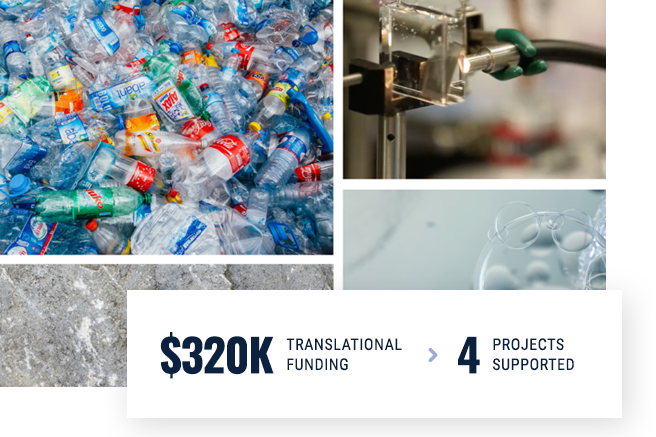
Research Teams Receive Translational Funding
The climate crisis demands new and better technology—from green energy sources to cleaner industrial processes and far beyond.
With industry support, we are developing next-generation, “off-the-shelf” therapeutic approaches that can be applied to a broad range of human diseases.
Industry Engagement Advancing Research
Industry engagement, through individual sponsored research projects and multi-year, university-wide research alliances, advances science, brings real-world problems into the lab, and effectively propels early-stage technologies toward commercial partnership. In fiscal year 2025, OTD enabled 81 industry collaborations with Harvard labs. The following are a few highlights from this past fiscal year, made possible by industry support for Harvard labs.
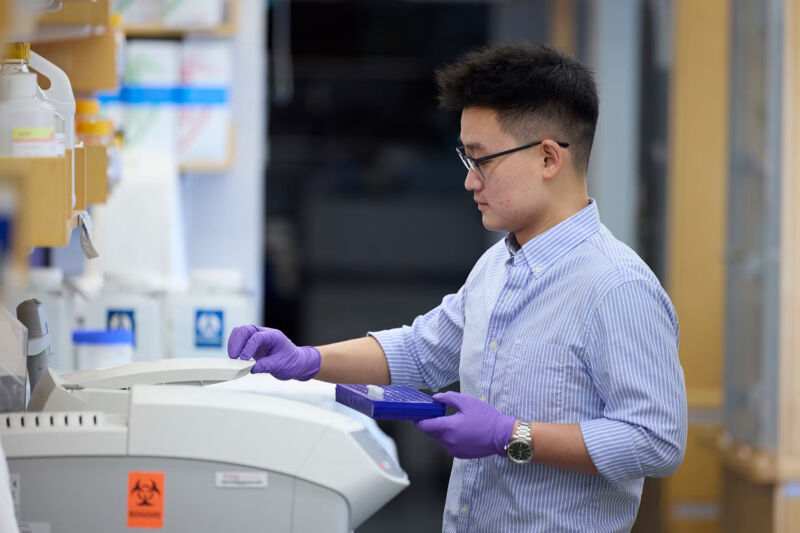
Tackling obesity and age-related diseases
A new collaboration between the lab of Prof. Gökhan Hotamışlıgil at Harvard T.H. Chan School of Public Health and İş Private Equity of Istanbul aims to translate groundbreaking discoveries about a protein that helps regulate metabolism and inflammation.
Discovering treatments for diabetes
LAB eN2, an accelerator established through a strategic corporate alliance with Evotec and Novo Nordic, provides support to a research project in the lab of Prof. Sloan Devlin at Harvard Medical School.
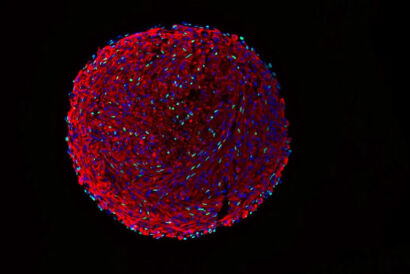
Speeding understanding, treatment of MD, ALS
A research team in the Department of Stem Cell and Regenerative Biology, led by Prof. Lee Rubin and Harvard research scientist Feodor Price, developed a new tool for generating large numbers of muscle stem cells, in vitro. This research was supported by the Blavatnik Biomedical Accelerator and a strategic alliance with National Resilience.

SEAS researchers develop quantum world on a chip
Prof. Evelyn Hu and a research team at the John A. Paulson School of Engineering and Applied Sciences have developed a platform for manipulating qubits in silicon for quantum networks. This research was supported by a research alliance with AWS.
Tackling obesity and age-related diseases
A new collaboration between the lab of Prof. Gökhan Hotamışlıgil at Harvard T.H. Chan School of Public Health and İş Private Equity of Istanbul aims to translate groundbreaking discoveries about a protein that helps regulate metabolism and inflammation.
Discovering treatments for diabetes
LAB eN2, an accelerator established through a strategic corporate alliance with Evotec and Novo Nordic, provides support to a research project in the lab of Prof. Sloan Devlin at Harvard Medical School.
Speeding understanding, treatment of MD, ALS
A research team in the Department of Stem Cell and Regenerative Biology, led by Prof. Lee Rubin and Harvard research scientist Feodor Price, developed a new tool for generating large numbers of muscle stem cells, in vitro. This research was supported by the Blavatnik Biomedical Accelerator and a strategic alliance with National Resilience.
SEAS researchers develop quantum world on a chip
Prof. Evelyn Hu and a research team at the John A. Paulson School of Engineering and Applied Sciences have developed a platform for manipulating qubits in silicon for quantum networks. This research was supported by a research alliance with AWS.
Harvard Research Changing Lives
Harvard researchers have developed hundreds of discoveries that have led to protected innovations—fueling tomorrow’s solutions to unmet societal needs. OTD is exploring commercialization opportunities for the following innovations, which achieved critical advancements in fiscal year 2025.
3D printing advances artificial organ creation
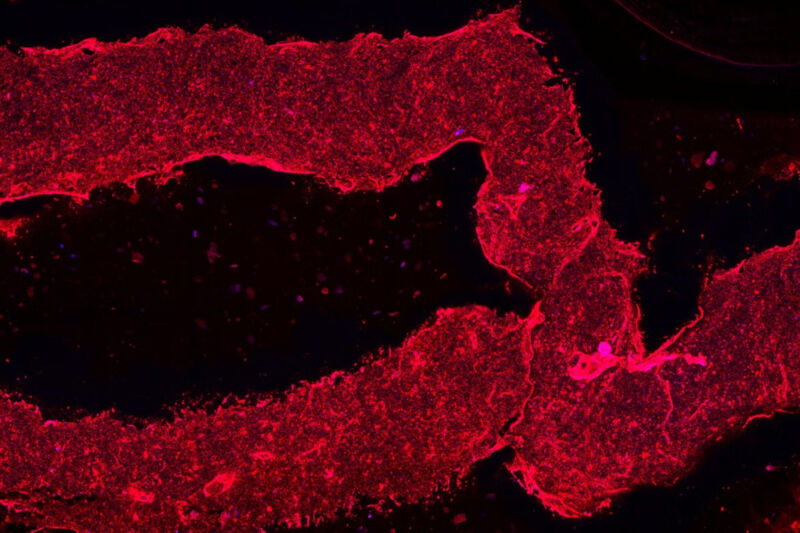
A research team led by Jennifer Lewis, a Wyss Core Faculty member and professor at the John A. Paulson School of Engineering and Applied Sciences, has developed a new printing method that creates branching vessels in heart tissue, mimicking the structure of human vasculature in vitro.
Harvard team develops soft robotic stroke device
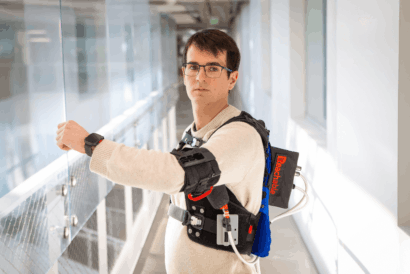
The Harvard Move Lab at the John A. Paulson School of Engineering and Applied Sciences is led by Faculty Director Prof. Conor Walsh and Executive Director Prof. Paul Sabin. With past support from the Wyss Institute, the research team is developing a robotic device for stroke survivors.
Harvard team advances understanding of thyroid hormones
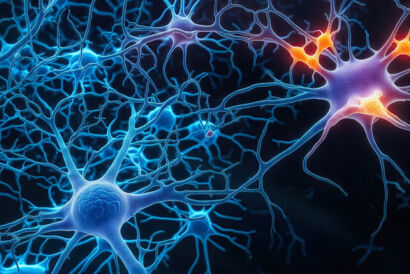
A Blavatnik Biomedical Accelerator-supported research project led by Bernardo Sabatini, professor at Harvard Medical School and director of the Kempner Institute at Harvard University, and Daniel Hochbaum, research fellow in the Blavatnik Institute at HMS, shows that thyroid hormone changes the wiring of brain circuits in a manner that drives animals to engage in exploratory behavior.
Breakthrough tech transforms brain research
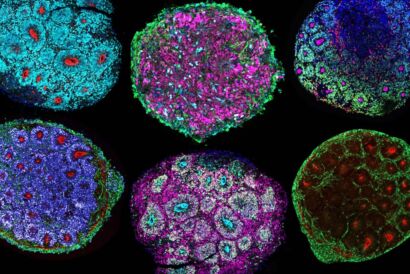
A Blavatnik Biomedical Accelerator-supported research project led by Prof. Paola Arlotta at Harvard’s Department of Stem Cell and Regenerative Biology has resulted in a platform that could help scientists better understand the human brain and its responses to various stimuli.

Chemists explore how the microbiome impacts health
Prof. Sloan Devlin and other chemists in her field discuss advancements made to uncover the mechanisms through which the microbiome impacts our health. The Blavatnik Biomedical Accelerator supported related research from Prof. Devlin’s lab.
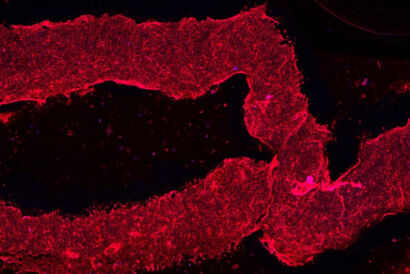
3D printing advances artificial organ creation
A research team led by Jennifer Lewis, a Wyss Core Faculty member and professor at the John A. Paulson School of Engineering and Applied Sciences, has developed a new printing method that creates branching vessels in heart tissue, mimicking the structure of human vasculature in vitro.
Harvard team develops soft robotic stroke device
The Harvard Move Lab at the John A. Paulson School of Engineering and Applied Sciences is led by Faculty Director Prof. Conor Walsh and Executive Director Prof. Paul Sabin. With past support from the Wyss Institute, the research team is developing a robotic device for stroke survivors.
Harvard team advances understanding of thyroid hormones
A Blavatnik Biomedical Accelerator-supported research project led by Bernardo Sabatini, professor at Harvard Medical School and director of the Kempner Institute at Harvard University, and Daniel Hochbaum, research fellow in the Blavatnik Institute at HMS, shows that thyroid hormone changes the wiring of brain circuits in a manner that drives animals to engage in exploratory behavior.
Breakthrough tech transforms brain research
A Blavatnik Biomedical Accelerator-supported research project led by Prof. Paola Arlotta at Harvard’s Department of Stem Cell and Regenerative Biology has resulted in a platform that could help scientists better understand the human brain and its responses to various stimuli.
Chemists explore how the microbiome impacts health
Prof. Sloan Devlin and other chemists in her field discuss advancements made to uncover the mechanisms through which the microbiome impacts our health. The Blavatnik Biomedical Accelerator supported related research from Prof. Devlin’s lab.
Harvard Innovations Making Real World Impact
Innovation from Harvard labs continues to drive economic growth, create jobs, and address global challenges. The following companies are further advancing Harvard innovations in areas such as climate solutions, antibiotics, medical devices, diabetes, Alzheimer’s, heart disease, and more.
Featured Startups

Novel cell therapy platform advances to address multiple therapeutic areas
GC Therapeutics announced the launch of its technology, TFome™, the world’s first “plug and play” induced pluripotent stem cell (iPSC) programming platform for cell therapies across multiple therapeutic areas. The research team out of Prof. George Church’s lab at Harvard Medical School received instrumental funding and consultation support from Harvard’s Blavatnik Biomedical Accelerator, along with support from the Wyss Institute.
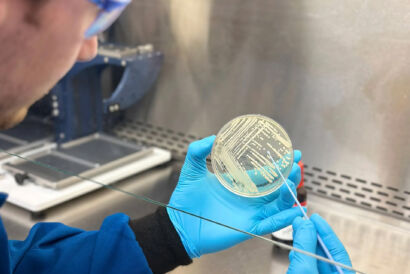
New antibiotic to treat drug-resistant infections and diseases
Kinvard Bio launched with new compounds developed in Prof. Andrew Myers lab at Harvard’s Department of Chemistry and Chemical Biology in the hopes of treating drug-resistant infections and diseases. Kelvin Wu and Ben Tresco, co-founders of Kinvard Bio, co-led the research team. The research project advanced to startup formation with support from the Blavatnik Biomedical Accelerator and Combating Antibiotic-Resistant Bacteria Biopharmaceutical Accelerator (CARB-X).

Technology explores an untouched layer of the atmosphere to gather climate data and develop new communication systems
Rarefied Technologies, a startup from Prof. Joost Vlassak’s lab at the Harvard John A. Paulson School of Engineering and Applied Sciences, has developed technology that can access the mesosphere, the unexplored region between the upper and lower atmospheres. The Harvard Grid Accelerator supported this research project.
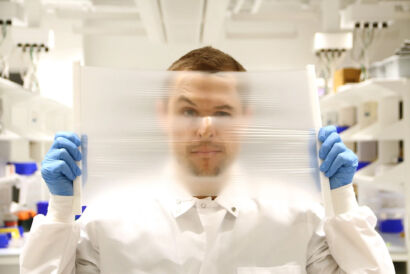
Climate tech solution poised to disrupt HVAC industry
Prof. Jonathan Grinham from Harvard’s Graduate School of Design collaborated with staff scientist Jack Alvarenga and others in Prof. Joanna Aizenberg’s lab at the John A. Paulson School of Engineering and Applied Sciences to develop a technology to enable a more efficient air conditioning and dehumidification system. Initial research was supported by the Wyss Institute and Harvard’s Office of the Vice Provost for Climate and Sustainability. The team received support from the Harvard Grid Accelerator for their advanced technology and launched Trellis Air.
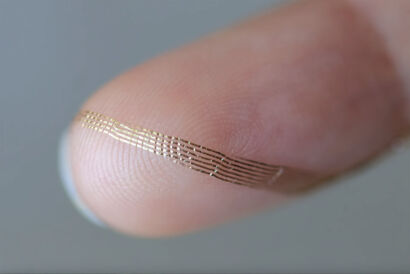
Soft brain implant for traumatic brain injuries
Axoft, a startup based on foundational research out of Prof. Jia Liu’s lab at the John A. Paulson School of Engineering and Applied Sciences and Prof. Hongkun Park’s lab at Harvard’s Department of Chemistry and Chemical Biology, is developing a soft, safer brain implant to measure brain activity in patients with traumatic brain injuries.
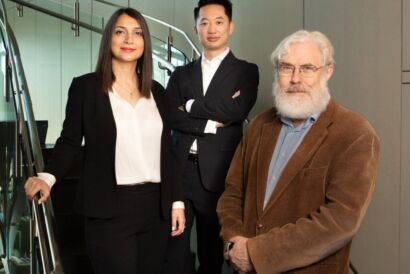
Novel cell therapy platform advances to address multiple therapeutic areas
GC Therapeutics announced the launch of its technology, TFome™, the world’s first “plug and play” induced pluripotent stem cell (iPSC) programming platform for cell therapies across multiple therapeutic areas. The research team out of Prof. George Church’s lab at Harvard Medical School received instrumental funding and consultation support from Harvard’s Blavatnik Biomedical Accelerator, along with support from the Wyss Institute.
New antibiotic to treat drug-resistant infections and diseases
Kinvard Bio launched with new compounds developed in Prof. Andrew Myers lab at Harvard’s Department of Chemistry and Chemical Biology in the hopes of treating drug-resistant infections and diseases. Kelvin Wu and Ben Tresco, co-founders of Kinvard Bio, co-led the research team. The research project advanced to startup formation with support from the Blavatnik Biomedical Accelerator and Combating Antibiotic-Resistant Bacteria Biopharmaceutical Accelerator (CARB-X).
Technology explores an untouched layer of the atmosphere to gather climate data and develop new communication systems
Rarefied Technologies, a startup from Prof. Joost Vlassak’s lab at the Harvard John A. Paulson School of Engineering and Applied Sciences, has developed technology that can access the mesosphere, the unexplored region between the upper and lower atmospheres. The Harvard Grid Accelerator supported this research project.
Climate tech solution poised to disrupt HVAC industry
Prof. Jonathan Grinham from Harvard’s Graduate School of Design collaborated with staff scientist Jack Alvarenga and others in Prof. Joanna Aizenberg’s lab at the John A. Paulson School of Engineering and Applied Sciences to develop a technology to enable a more efficient air conditioning and dehumidification system. Initial research was supported by the Wyss Institute and Harvard’s Office of the Vice Provost for Climate and Sustainability. The team received support from the Harvard Grid Accelerator for their advanced technology and launched Trellis Air.
Soft brain implant for traumatic brain injuries
Axoft, a startup based on foundational research out of Prof. Jia Liu’s lab at the John A. Paulson School of Engineering and Applied Sciences and Prof. Hongkun Park’s lab at Harvard’s Department of Chemistry and Chemical Biology, is developing a soft, safer brain implant to measure brain activity in patients with traumatic brain injuries.
Featured Advancements
The following featured innovations were developed in Harvard labs and made key advancements in fiscal year 2025. You can view our most recent newsletter to read the latest updates on licensed innovations.
Genetically edited pig kidney used in second successful transplant
eGenesis provided the donor kidney, created with gene editing technology developed at Harvard, in second pig kidney transplant. A team of surgeons at the Mass General Transplant Center, led by Harvard Medical School (HMS) physician-scientists, has successfully completed the second transplant of a genetically edited pig kidney into a living patient. The donor kidney was developed by eGenesis, a xenotransplantation therapy company co-founded by HMS Prof. George Church and former HMS postdoctoral fellow Luhan Yang, with support from the Wyss Institute. Read more.
Improved IVF technology advances to Stage 3 clinical trials
Gameto, a startup advancing technology created in Prof. George Church’s lab at the Wyss Institute and HMS, received US FDA clearance for its Investigational New Drug application and entered Stage 3 clinical trials for Fertilo, its IVF technology.
Clinical trials advance as patients receive taplucainium, a new drug to treat chronic cough
Nocion Therapeutics, a startup with innovations out of Harvard Medical School (HMS) and Boston Children’s Hospital, announced the first patient has been dosed in the Phase 2b ASPIRE clinical trial of taplucainium for the treatment of chronic cough, following successful patient dosage in a Phase 2a trial. The Blavatnik Biomedical Accelerator supported the advancement of the technology developed through research led by Bruce Bean, professor at HMS, and Clifford Woolf, professor at HMS and director of the Neurobiology Center at Boston Children’s Hospital. Read more.
Blood test to diagnose Alzheimer’s Disease receives FDA Breakthrough Device Designation
Spear Bio, a startup based on foundational research developed by Wyss Institute Core Faculty member Prof. Peng Yin and former Wyss Institute Technology Development Fellow Feng Xuan, received Breakthrough Device Designation from the US Food and Drug Administration (FDA) for its blood test for diagnosing Alzheimer’s Disease.
Clinical trials progress for treatment for heart failure
Tectonic Therapeutic, a startup with Blavatnik Biomedical Accelerator-supported technology and co-founded by Harvard Medical School Professors Andrew Kruse and Timothy Springer, announced positive Phase 1a clinical trial results for TX45, its lead program addressing a Cardio-Pulmonary Disease (Group 2 Pulmonary Hypertension in Heart Failure with preserved Ejection Fraction). As a result, they are proceeding with the APEX Phase 2 clinical trial.
The above are achievements made in FY2025. View our newsletters for recent advancements on licensed innovations.
OTD Impact Report FY2024
In fiscal year 2024, 14 startups launched based on Harvard innovations. Read more about how OTD advanced Harvard’s vision for tackling the world’s most pressing challenges and creating lasting impact in 2024. Download Report