

Research Collaborations
Build strategic research collaborations with Harvard labs
OTD helps industry collaborate directly with Harvard labs to address scientific and technical challenges - identifying the right research collaborators and structuring agreements that protect academic values while advancing your R&D goals.
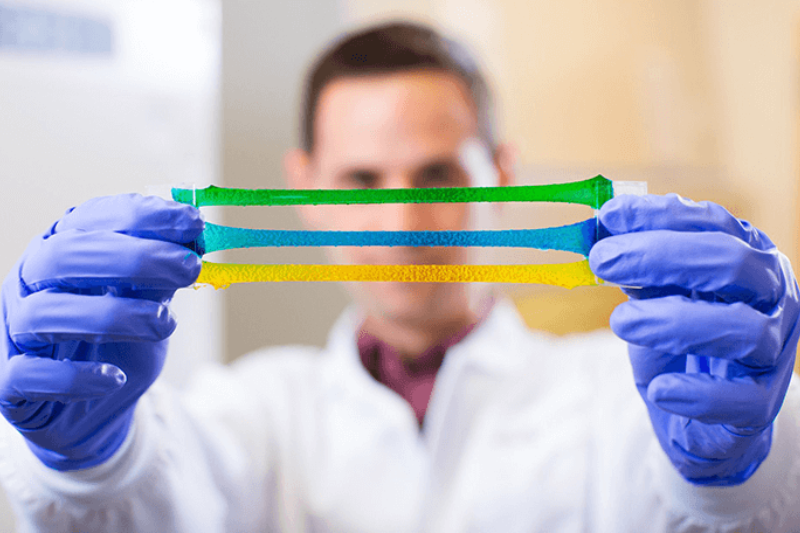
Why Collaborate with Harvard Labs?
Sponsored research collaborations can open new R&D directions, accelerate problem-solving, and build long-term relationships with innovators shaping the future of their fields.
Key benefits:
- Advance your R&D agenda with leading experts in their fields and pioneering scientific research.
- Access specialized expertise and facilities that may be difficult or costly to replicate in-house.
- Co-develop knowledge, tools, and platforms that inform product pipelines, strategies, or standards.
- Engage future talent by working with graduate students and postdoctoral researchers on projects aligned with your priorities.
How the Research Collaboration Process Works
We aim to make engagement with Harvard research straightforward and predictable.

Choosing the Right Type of Research Collaboration
OTD supports a range of collaboration models, including material transfers, industry-sponsored research agreements, and university-wide strategic alliances. We help you select the structure that best fits your goals, risk profile, and timeline.
Confidentiality Agreements
Harvard and its industry partners typically enter into confidentiality agreements prior to discussing sensitive or proprietary information in connection with a potential license or research collaboration agreement. Below are illustrative examples of a mutual confidential disclosure agreement and one in which only Harvard is providing confidential information.
Sample Confidentiality Agreement (mutual)
Sample Confidentiality Agreement (one-way)
Industry-Sponsored Research Agreements
Our industry-sponsored research collaborations range from open science agreements focused on fundamental research and shared knowledge, to translational-science agreements aimed at commercial impact and new technologies that may be licensed or form the basis of startups.
Open Science Agreements
Applicable Projects:
Academic research focused on fundamental science, data analysis, and the development of analytical methods
Faculty Considerations:
Objective is early-stage discovery and publications are prioritized
Rights to Company:
Right to use research findings for any purpose, as long as kept confidential until publication
Applied Science Agreements
Applicable Projects:
Applied research focused on problems with commercial potential, development of platform technologies and methods
Faculty Considerations:
Some commercialization interest but uncertain commercial path to revenue, IP is unlikely, company may develop future IP informed by the research findings of the project, publications prioritized
Rights to Company:
Pre-defined financial terms for non-exclusive license to arising IP, option for exclusive license to arising IP on terms to be negotiated at the conclusion of the project, right to use research findings for any purpose as long as kept confidential until publication
Translational Science Agreements
Applicable Projects:
Translational research with intentional effort to drive science toward commercial outcome: proof of concept experiments designed to validate commercial potential, novel compositions of matter, new materials and devices; technology emerging from the project is candidate for license and/or startup launch
Faculty Considerations:
Applied research with a potential market or product pathway, evaluation of results through the lens of IP creation, publication desired to validate results for potential investors and benefit future commercial opportunity
Rights to Company:
Option for exclusive or non-exclusive license to arising IP on terms to be negotiated at the conclusion of the project, right to use research finding for any purpose as long as kept confidential until publication
Translational Science Sample Agreement
Material Transfer Agreements
Harvard OTD arranges thousands of material transfers each year to facilitate scientific advancement and innovation. The sample agreements below contain terms representative of Material Transfer Agreements (MTAs) but are provided for illustrative purposes only and may be subject to change.
Sample MTA to Company For Internal Research
Sample Material Evaluation MTA
Protecting Academic Values and Integrity
All collaboration agreements with industry at Harvard are structured to uphold academic freedom, protect the integrity of academic research, and ensure that Harvard technologies are developed to their fullest potential for the public’s benefit. OTD works closely with faculty, departments, and University offices to ensure that collaboration terms are consistent with Harvard policies and best practices. To this end, all research agreements developed by OTD:
- Are limited in duration and tied to a research plan generated by Harvard faculty
- Safeguard Harvard researchers’ ability to publish the results of their studies
- Secure ownership of the results of the sponsored research, thereby enabling OTD to ensure their further development in the best interest of the public
- Set reasonable limits on rights granted to corporate partners — no perpetual rights, “sweetheart” deals, or ability to suppress technology
- Offer no guaranteed results or other “deliverables”; the research and any resulting IP are provided to the company on an “as is” basis
- Reserve the rights of researchers at Harvard and elsewhere to use any resulting IP for educational and not-for-profit research purposes
Get in Touch
Whether you are interested in material transfers, a single-project collaboration, or a long-term multi-project alliance, OTD is ready to help.