News

Press Contact: Kirsten Mabry | (617) 495-4157

August 21st, 2026

A Smartphone Navigation App for People with Blindness and Low Vision

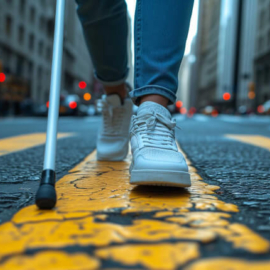
Harvard engineers have developed Mobilio, a smartphone app that uses AI, built-in sensors, and personalized audio beeps to give users with blindness or low vision continuous guidance and obstacle avoidance. Ph.D. student Raymond Liu led the research in collaboration with Patrick Slade, assistant professor of bioengineering at John A. Paulson School of Engineering and Applied Sciences and associate faculty member of the Kempner Institute. The Harvard Grid Accelerator supported the research.

August 5th, 2026

Chemist’s fix for a stubborn biomanufacturing problem? Engineer the liquid, not the machine

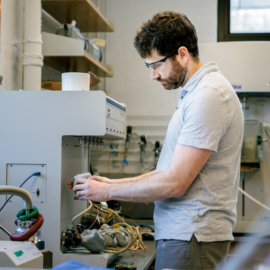
Scaling biomanufacturing is often constrained by how efficiently gases move through liquids—FluxBio, a Harvard startup out of the lab of Jarad Mason in the Department of Chemistry & Chemical Biology at Harvard, found a solution by re-engineering the liquid, not the machine. The microporous water technology received critical early support from the Blavatnik Biomedical Accelerator to advance while in the lab and ultimately form the basis for FluxBio.

July 31st, 2026

Games as Design Research

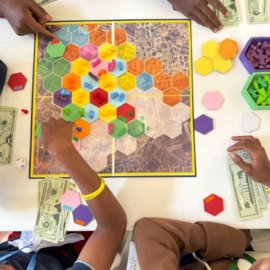
Harvard Design Magazine covers how faculty, students, and practitioners use play to generate knowledge, engage community, and rethink urban design. The magazine features MOOT City, an urban planning game developed by Gorata Kgafela during her doctoral research in Botswana for her Doctor of Design degree at Harvard Graduate School of Design.

July 27th, 2026

Custom Blood Vessel Grafts Made in Minutes

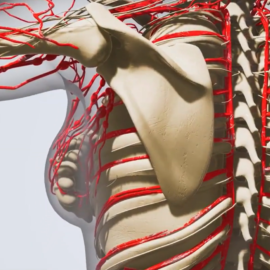
A research team out of Kit Parker’s lab at the John A. Paulson School of Engineering and Applied Sciences has developed a way to create customizable synthetic blood vessel grafts in minutes using a focused rotary jet spinning technology. The research has the potential to make time-sensitive medical treatments faster and more personalized.

Page 1 of 72