
News All News
July 27th, 2026
Xenotransplantation Enters a New Era
As the waitlist for donor organs grows, surgeon Leonardo Riella sees animal-to-human kidney transplants getting closer to the clinic
By Molly McDonough
Published in Harvard Medicine Magazine
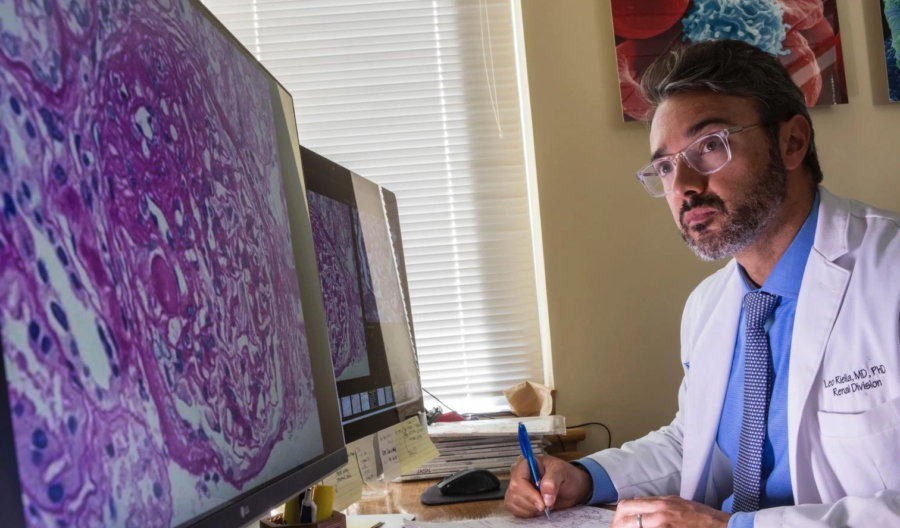
Leonardo Riella. Photo: MGB Photography
In 1906, a French surgeon named Mathieu Jaboulay attached a pig’s kidney to the elbow of a woman with end-stage renal disease. At first, blood circulated between the patient and the kidney, and the organ even started secreting urine. But within days, the patient’s body rejected the organ, blood clots formed, and the transplant failed.
This is widely regarded as the first reported transplant of an animal organ to a human, a practice called xenotransplantation. A potential solution to the human donor organ shortage, xenotransplantation remained a scientific ambition for another century — but the incompatibility between species often seemed insurmountable. According to Leonardo Riella, the HMS Harold and Ellen Danser Associate Professor of Surgery at Massachusetts General Hospital, a cynical joke circulated in the medical community: “Xenotransplantation is the future of transplant and always will be.”
A few years ago, though, the surgeon sensed a shift. Led by Tatsuo Kawai, an HMS professor of surgery and the A. Benedict Cosimi Chair in Transplant Surgery at Mass General, Riella’s colleagues at the Center for Transplantation Sciences had been using CRISPR gene-editing technologies to boost the compatibility of animal organs with that of potential hosts. They also had access to powerful new drugs that could suppress hosts’ immune systems to prevent the organs from being rejected. They transplanted pig kidneys into monkeys and watched the primates survive — not just for days or even weeks, but for years.
“That was, I think, the first time we realized that we’d cracked the code,” Riella recalls. “As a physician-scientist, my lens was, OK, let’s start thinking about how we can move this to the clinic.”
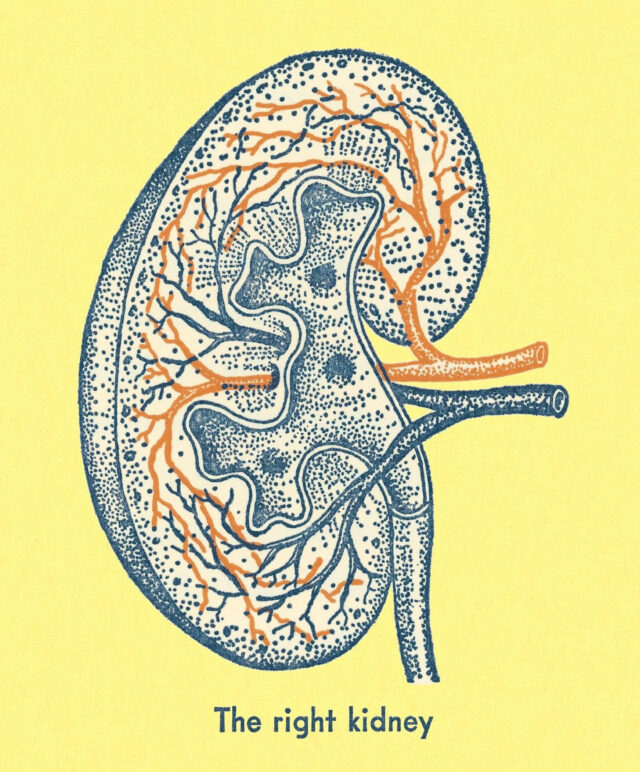
Illustration: CSA Images/iStock/Getty Images Plus
In 2024, Riella helped lead the Mass General team that made international headlines for transplanting a genetically edited pig kidney into a human patient for the first time. Although the patient, Richard Slayman, died around two months later from a cardiac event, the case provided a rich source of data that helped the team successfully petition the FDA to move beyond single-patient cases and into clinical trials. In addition to collaborating on one of those trials — which will test the safety and efficacy of pig kidneys in patients over age 50 for up to 24 weeks after transplant — they are working with teams at other hospitals to establish consistent procedures and guidelines for xenotransplantation.
Harvard Medicine associate editor Molly McDonough spoke with Riella to learn more about how he and other scientists are managing the transition from isolated cases to coordinated clinical research and why he thinks that the “future of transplant” has already arrived.
Read the full interview at Harvard Magazine
Tags: xenotransplantation, Harvard startups, Wyss Institute, Harvard Medical School, George Church, intellectual property, Mass General Hospital, gene-editing, genetic engineering, kidney transplant
Press Contact: Kirsten Mabry | (617) 495-4157