News

Press Contact: Kirsten Mabry | (617) 495-4157

August 28th, 2026

Pulling carbon into seawater using engineered bacteria

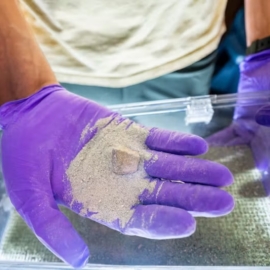
From the labs of Pam Silver, Elliot T. and Onie H. Adams Professor of Biochemistry and Systems Biology at Harvard Medical School (HMS) and Wyss Institute Core Faculty member, and Michael Springer, Professor of Systems Biology at HMS and Wyss Institute Associate Faculty member, a research team led by Neil Dalvie, a Fellow in Systems Biology at HMS, is developing a technology that uses engineered bacterial strains to accelerate mineral weathering. The research was supported by Harvard's Climate and Sustainability Translational Fund.

August 21st, 2026

A Smartphone Navigation App for People with Blindness and Low Vision

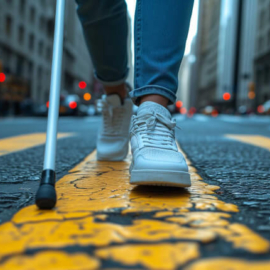
Harvard engineers have developed Mobilio, a smartphone app that uses AI, built-in sensors, and personalized audio beeps to give users with blindness or low vision continuous guidance and obstacle avoidance. Ph.D. student Raymond Liu led the research in collaboration with Patrick Slade, assistant professor of bioengineering at John A. Paulson School of Engineering and Applied Sciences and associate faculty member of the Kempner Institute. The Harvard Grid Accelerator supported the research.

August 19th, 2026

Lab-grown brain ‘organoids’ set longevity record

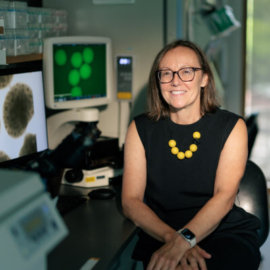
Researchers show that brain cells cultured in a dish can mimic normal cerebral development and even retain “memory” of their own histories. This research, led by  Paola Arlotta, Golub Family Professor of Stem Cell and Regenerative Biology at Harvard, was supported by the Blavatnik Biomedical Accelerator.

August 5th, 2026

Chemist’s fix for a stubborn biomanufacturing problem? Engineer the liquid, not the machine

Scaling biomanufacturing is often constrained by how efficiently gases move through liquids—FluxBio, a Harvard startup out of the lab of Jarad Mason in the Department of Chemistry & Chemical Biology at Harvard, found a solution by re-engineering the liquid, not the machine. The microporous water technology received critical early support from the Blavatnik Biomedical Accelerator to advance while in the lab and ultimately form the basis for FluxBio.

Page 1 of 73