News All News

Press Contact: Kirsten Mabry | (617) 495-4157

Tag: Harvard Startups

July 7th, 2026

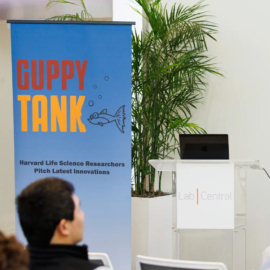
Think ‘Shark Tank,’ without the teeth

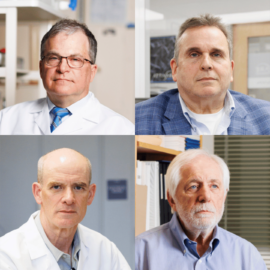
In a recent Guppy Tank event, Professor Jeffrey Smith received feedback from a panel of investors on a new molecule that could help most sun-sensitive patients, research supported by the Blavatnik Biomedical Accelerator. Harvard's Office of Technology Development and LabCentral co-host the Guppy Tank series, where innovators pitch their early-stage concepts to a panel of entrepreneurs and investors for constructive, in-depth feedback.
July 7th, 2026

Tracing the evolution of a vaccine for cancer and malaria

Attivare, a startup advancing a portfolio of technologies developed at the Wyss Institute, John A. Paulson School of Engineering and Applied Sciences, Dana-Farber Cancer Institute, and Massachusetts General Hospital, has shown promising results in cancer clinical trials and is developing a malaria vaccine. Through decades of innovation and cross-disciplinary collaboration, the technology has the potential to fight cancer more effectively or prevent pathogen-related infections. 

June 22nd, 2026

Finding ways to ‘drug the undruggable’ diseases

For more than three decades, Greg Verdine has brought bold, innovative methods to solving some of medicine’s biggest challenges - from early-stage work backed by the Harvard Blavatnik Biomedical Accelerator to the launch of multiple startups.

June 15th, 2026

Heat Sensor for Living Cells

Researchers at the Harvard John A. Paulson School of Engineering and Applied Sciences built a device called a pico-calorimeter that directly measures heat signals from small groups of living cells. The device could lead to advances in bacterial growth monitoring or antibiotic resistance testing.

June 9th, 2026

Son’s diabetes diagnosis sent scientist on quest for cure

More than three decades of research by Doug Melton, Catalyst Professor and co-director of the Harvard Stem Cell Institute, led to the launch of Semma Therapeutics and the development of a potential new treatment for Type 1 diabetes that uses stem cells to make healthy insulin-producing cells that can be transplanted into patients. The Blavatnik Biomedical Accelerator supported the research that led to the launch of Semma Therapeutics out of the Melton Lab.

Page 2 of 20