News All News

Press Contact: Kirsten Mabry | (617) 495-4157

Tag: John A. Paulson School Of Engineering And Applied Sciences

July 27th, 2026

Custom Blood Vessel Grafts Made in Minutes

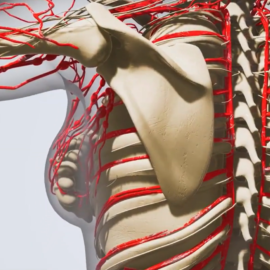
A research team out of Kit Parker’s lab at the John A. Paulson School of Engineering and Applied Sciences has developed a way to create customizable synthetic blood vessel grafts in minutes using a focused rotary jet spinning technology. The research has the potential to make time-sensitive medical treatments faster and more personalized.
July 7th, 2026

Tracing the evolution of a vaccine for cancer and malaria

Attivare, a startup advancing a portfolio of technologies developed at the Wyss Institute, John A. Paulson School of Engineering and Applied Sciences, Dana-Farber Cancer Institute, and Massachusetts General Hospital, has shown promising results in cancer clinical trials and is developing a malaria vaccine. Through decades of innovation and cross-disciplinary collaboration, the technology has the potential to fight cancer more effectively or prevent pathogen-related infections. 

November 12th, 2025

A potential quantum leap

A collaborative research team led by Mikhail Lukin, co-director of the Quantum Science and Engineering Initiative and a professor at the Harvard John A. Paulson School of Engineering and Applied Sciences, published research on a new system that addresses the challenge of quantum error correction. QuEra Computing, a startup company spun out of Lukin’s lab, is collaborating with the research team to advance these discoveries.

August 25th, 2025

Digital to Analog in One Smooth Step

Harvard SEAS researchers have created a device that can bridge digital electronic signals and analog light signals in one fluid step, offering a potential replacement for energy-intensive systems used in today’s high-speed data networks. The researchers’ device was fabricated using a lithium niobate foundry process developed by HyperLight Corporation, a startup that is advancing innovations from Prof. Marko Loncar’s lab.

Page 1 of 2